
Meet André Bear
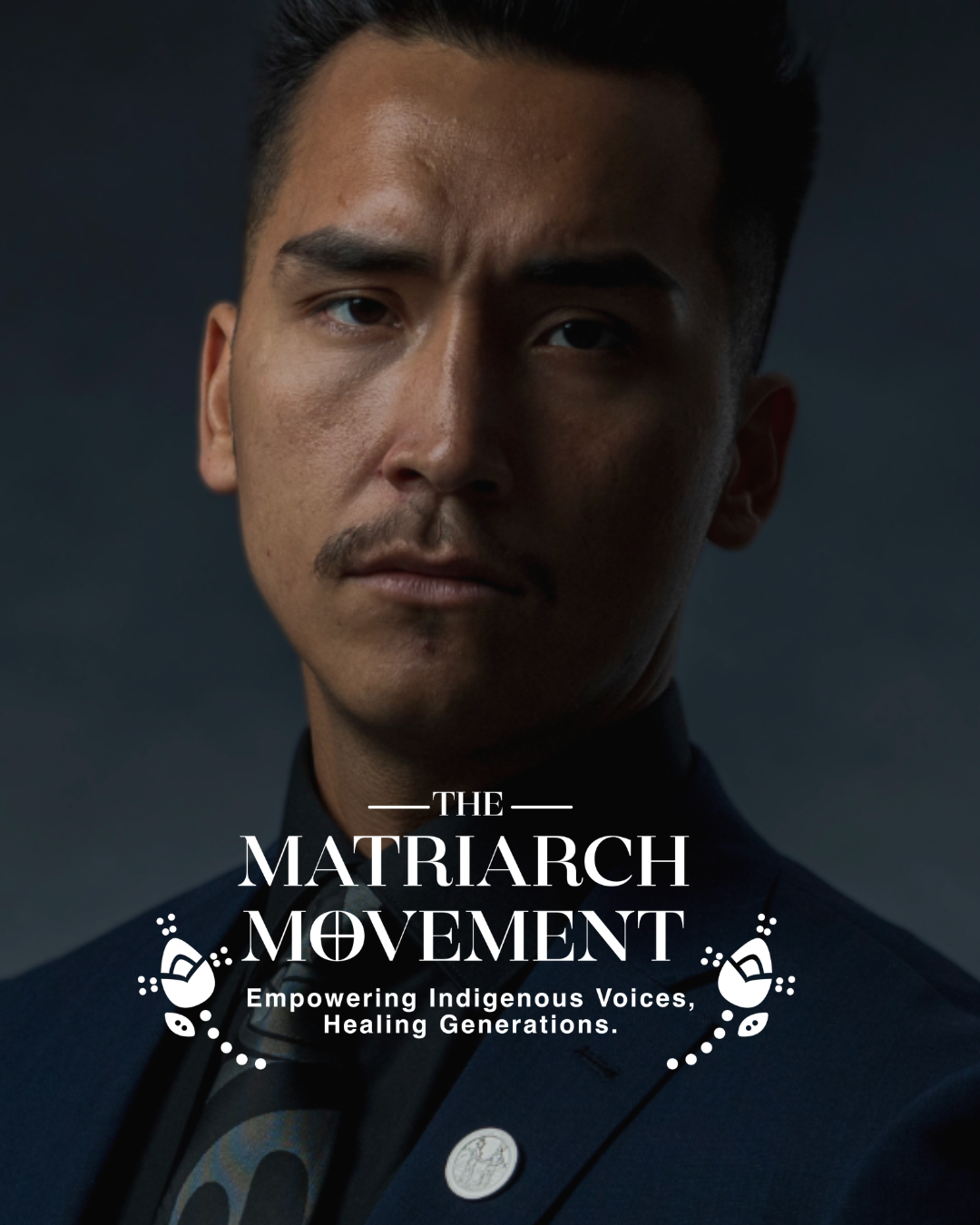
On this episode of the Matriarch Movement podcast, “Restoring Indigenous Legal Order,” host Shayla Oulette Stonechild sits down with André Bear on Treaty 13 territory in Tkaronto. This is part of Season 6, Indigenous Voices of This Generation, made in partnership with the Indigenous Screen Office and YouTube Canada.
André is Plains Cree and two-spirit, an educator and advocate whose work is reshaping what Indigenous sovereignty looks like in practice. His Cree name is The White Horse That Comes From Heaven. He holds a Bachelor of Education and a Juris Doctor from the University of Saskatchewan. He was later offered a full scholarship for a Master of Law, and walked away from it to work directly with Nations instead.
At just 21, André was appointed an advisor to the Minister of Crown-Indigenous Relations, helping implement the Truth and Reconciliation Commission’s Call to Action 66. In 2021 he founded iNation (Indigenous Nation Rebuilding), a consulting company dedicated to revitalizing Indigenous legal orders: the clan systems, ceremonies and creation stories that governed our ways of life long before contact. For more than a decade, he has trained under medicine people to understand and live by the traditional laws of the people.
What follows is a conversation about ceremony, Cree/Néhiyaw law, foster care, dreams, grief and the future we have not written yet.
A Pikachu in the boardroom
The episode opens with a small gift: Shayla hands André a Pikachu. It is a nod to something he has spoken about before. André carries Pokémon with him everywhere, into airports, legal meetings and sessions with the Government of Canada.
It can look funny next to a suit and a law degree, but for André it is serious. Pokémon was what he loved as a kid in foster care, and his work today is directly tied to protecting and advocating Indigenous children within the foster care system. Holding one keeps him grounded and regulates his nervous system while he travels. It also reminds everyone in the room who the work is really for.
He credits the idea to his biggest inspiration, Dr. Cindy Blackstock, who brings her Spirit Bear with her when she takes Canada to court over discrimination against First Nations children. As Shayla puts it, maybe we are all trying to heal our own inner child.
Turning pain into power through ceremony
André did not grow up in ceremony. At 15, he had been kicked out of four high schools and his family had often been homeless. After his mom took him to see a medicine man, he had a spiritual awakening sitting in a parking lot. Staring into a streetlight, he saw his future self: a grown man in a black suit, surrounded by family and love.
That vision became the first of many that kept him on his path. When his mom faced a cancer scare when he was 17, André entered the Sundance lodge for the first time. He watched ceremony change his family. His mom, after many attempts at rehab, is now nearly ten years sober and has completed four years of Sundance herself, and his sisters dance too. Next year André will dance his 16th year in a row.
André and Shayla also talk about holding ceremony with integrity. He does not photograph or share what happens in the lodge, while still respecting those who were taught differently. The challenge, he says, is inspiring young people to come home to ceremony while honouring that it is a personal and sacred journey. Or, as Shayla frames it, walking with embodiment rather than performing it.
“Our ceremonies really are our superpower.”
Néhiyaw law is lived, not just written
When many people hear the word “law,” they think of colonial law. André offers a different starting point: manâcihitowin, respect for one another.
The deepest respect he has ever felt is inside the Sundance lodge, toward the elders, the women and men, the drums, the songs and the fire. Every word and movement is careful. That level of respect, he says, is our law. Imagine if we carried it outside the lodge and treated each other that way every single day, on Facebook, at band meetings, everywhere.
Shayla reflects that ceremony humbled her the same way. It dismantles the ego and teaches you to be quiet and observe.
“The answer is returning to our ceremonies, to understanding our laws.”
Law school, racism and a Spirit Helper
André is honest about how hard law school was. He studied in Saskatchewan during the Gerald Stanley trial for the killing of Colten Boushie, which he attended. Classmates mocked him for speaking up. At the same time, he watched people with questionable claims to Indigenous identity collect scholarships and funding, while visibly Native students from reserves went without.
What carried him through was ceremony. He shares a story from his upcoming book: facing back-to-back six- and eight-hour exams, unable to sleep, he smudged with sweetgrass and prayed to one of his spirit helpers for help. That night he woke to the sound of a rattle being shaken over his head. He says without that help, he would not have made it through.
For Indigenous people who feel disconnected from ceremony because of colonization, adoption or growing up off-reserve, André understands. He did not attend his first sweat until he was 17, at Oskayak High School in Saskatoon, his last-resort school, which smudged with students every day. The man running that sweat, John Sugar, adopted him as a son and raised him in ceremony. After John passed, André says, he came in a dream and guided him to his current teacher, Fred.
His advice: find a teacher or an Elder you trust. It will not be easy, and you may feel embarrassed or ashamed at first, but it is the most meaningful thing you will ever do.
Rebuilding Nations, beyond the Indian Act
André never fit in at law firms. He knew he wanted to serve community directly, so he built iNation. Today he works alongside First Nations, Elders, Indigenous youth and families to bring back their own laws and change the systems that harm them, especially child welfare.
Having been in foster care himself, he speaks from experience. His goal is a future where we never need a child welfare system again, because we will have wahkohtowin (kinship and good relations) and healthy families. As he points out, a non-Indigenous lawyer cannot walk into a community and understand wahkohtowin. That understanding comes through language and ceremony.
André is clear that the Indian Act was built to destroy us. It created residential schools and the pass system, and Canada keeps amending it to make it fit. How can we expect healthy families and Nations under a law designed for our destruction? He holds love and respect for treaty advocates who see things differently, but he believes the path forward is restoring our own legal orders, Clan systems and traditional governance.
His teacher Fred has named the biggest obstacle in that work: grief. Restoring clan systems means families forgiving one another. We have to meet people where they are in their healing, André says, without giving up.
The future hasn’t been written yet
Asked about Indigenous futurism, André shares a dream. He saw something like a Hubble image of a galaxy, spiralling in the shape of a hand. In ceremony he was later told it was the hand of the Creator, holding up our universe. The message: Creation never ended. We are creating the future right now, so be careful what you think, more careful what you say, and most careful what you do.
The angels in that dream said even they do not know where we are going. That frightened him at first. Now he sees it as hope. Nothing is decided, which means we can make this a beautiful place for all of us.
What ‘matriarch’ means to André
To close, Shayla asks what the word matriarch means to him. André answers with his favourite Pokémon, Cubone, who wears his mother’s skull as a helmet and carries her bone into battle. Whatever his mom and sisters have carried, including residential school, he feels their strength inside him, protecting him as he moves forward.
Shayla shares how her own late father, who spent much of his life in child welfare and the prison system, drives her work, advocacy and purpose. Both of them have turned grief into a reason to live fully and advocate fiercely, for the families and ancestors who were never given that chance.
Listen and connect
The first line of André’s upcoming book, which he says is about 60% done, sums up his message:
“Pray as if your life depends on it, because it does.”
Watch or listen to the full episode now wherever you get the Matriarch Movement podcast. Follow André on Instagram and TikTok at @abearlaw and visit his website to book him for keynotes or consulting at https://www.ination.ca/public-speaking
This episode is part of Indigenous Voices of This Generation, Season 6 of the Matriarch Movement podcast, in partnership with the Indigenous Screen Office and YouTube Canada.
Explore

Seventh Generation Series
I'm Shayla, Founder, Advocate, and Champion of the Matriarch Movement—a non-profit online platform, podcast dedicated to amplifying the voices of Indigenous women and two-spirit individuals. Kahkiyaw niwâhkômâkanak, all my relations.
Tânisi!