
Matriarch Movement Podcast · Season 6: Indigenous Voices of This Generation produced in support of the Indigenous Screen Office, Youtube Canada and the Community Support Fund of ISC.
This season of the Matriarch Movement podcast, we’re sitting down with Indigenous voices from every corner of industry: artists, healers, educators and change makers. We want to know how they got to where they are. This week’s guest has built an entire world out of sound, community and the refusal to shrink.
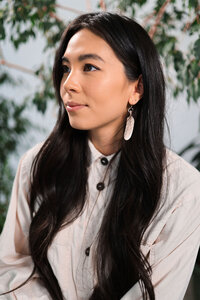
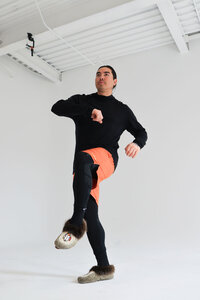
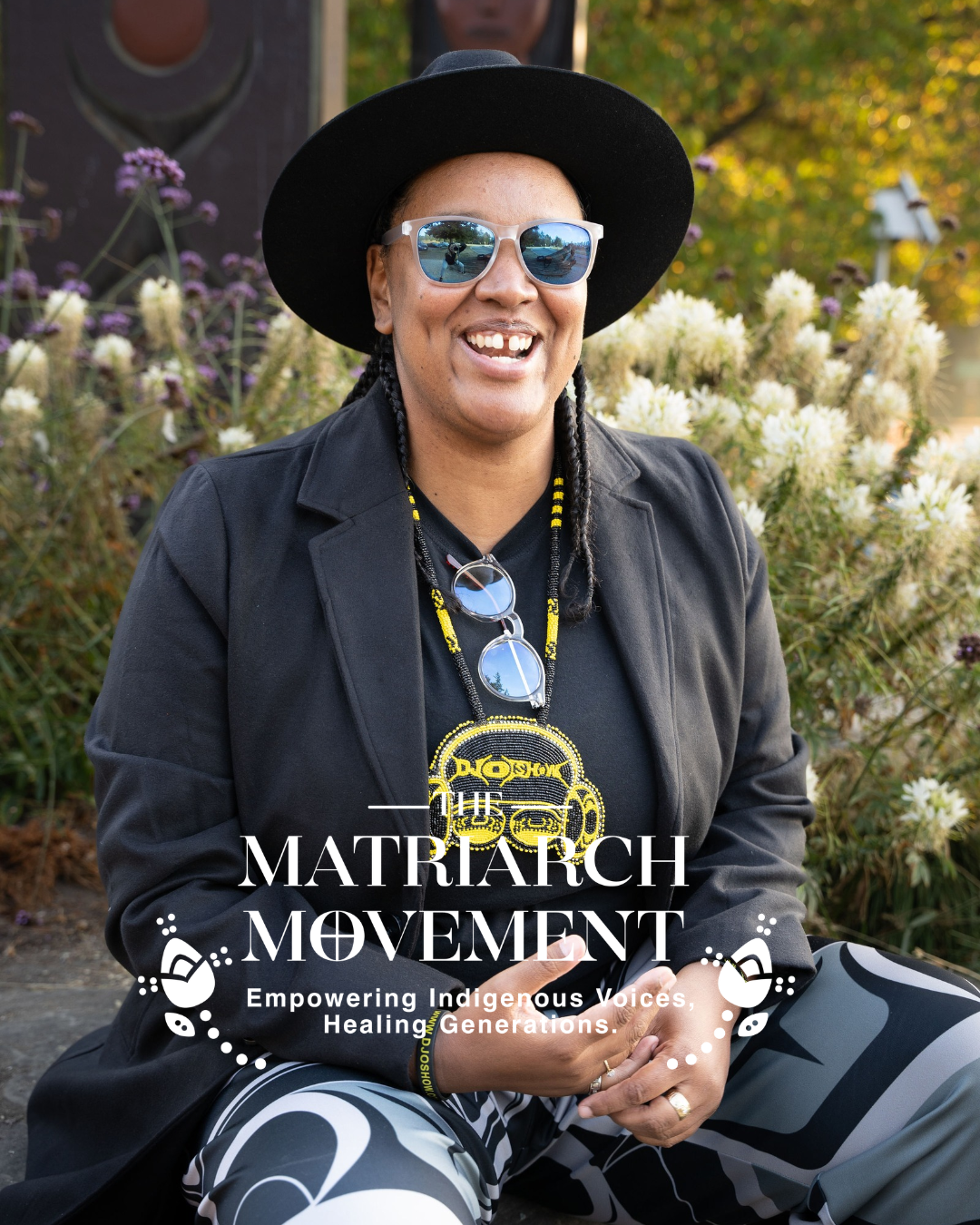
Orene Askew, known to most of us as DJ O Show, is an Afro-Indigenous, Two-Spirit, award-winning DJ, host, MC and motivational speaker. Born and raised on the X̱wemelch’stn (Capilano) Reserve in North Vancouver, she’s a proud member of the Sḵwx̱wú7mesh Úxwumixw (Squamish Nation). You may have heard her on Vancouver radio, or at Canucks and BC Lions games, Vancouver Indigenous Fashion Week, or the Great Outdoors Comedy Festival, where she opened for Kevin Hart and Russell Peters. Her awards include a BC Indigenous Business Award, a Standout Award from the Vancouver Pride Society, DJ of the Year at the Indigenous Hip Hop Awards, and Best Solopreneur from the Black Business Association of BC.
The accolades are impressive, but what really makes this episode is the story behind them.
Where the name came from
Orene went to radio school at BCIT and interned at The Beat 94.5 (now Virgin 94.5). The promotions team started calling her “O Show” because, in their words, everywhere she went it was a show: a joke in the lunchroom, a story at reception, the whole room laughing. Her Squamish name carries a different weight. It belonged to her great-great-grandfather, she received it in a ceremony about four years ago and carries it with her everywhere.
A walking, talking traffic light
Orene’s father is from Gary, Indiana (he grew up around the corner from the Jacksons). Her mother is from the Squamish Nation and is a day school survivor. Growing up mixed and mostly Black-presenting on the reserve wasn’t always easy, but over time people came to know her story and her family.
When asked how it feels to hold so many identities at once, she has the perfect image:
“I’m a walking, talking traffic light. There’s three things happening at once.”
For her, carrying those intersections is a sign from the Creator that she’s meant to bring people together. It’s the reason she does everything she does.
She’s also often the first person like her in the room, and she’s made peace with that responsibility: “I’m going to be the first, but I’m not going to be the last.” As part of the first generation in her family that didn’t go to residential school, she sees herself in the middle, watching her mom’s generation on one side and young people coming up on the other, with a lot of hope for them.
The fire that lit the flame
Orene was a DJ before she knew it. At 13 she was burning mix CDs for her friends with her own voice on them. After radio school she worked for mobile DJ companies for very little money, learned what she could, and in 2012 used a small business grant from her Nation to buy her own DJ gear.
Two months after launching her business, she came home from a 3 a.m. gig and woke up five hours later to someone pounding on her door. A fire that started at the neighbours’ house had spread into hers. No socks, no passport, no wallet. The only thing she grabbed was her DJ gear.
“It’s like a pun. It lit the flame under my butt. And ever since then, I’ve been riding this momentum train that does not stop.”
Two weeks later, with almost no clothes, she reluctantly went to a conference in Ottawa. She didn’t want people to feel sorry for her, but she shared her story anyway. There wasn’t a dry eye in the room. People lined up to hug her and raised money for her. That was the beginning of her motivational speaking career.
The fire changed how she sees material things, and it taught her something she now passes on to young people: you won’t always get the apology you deserve, and you have to be okay with that. Whenever she catches herself complaining, she reminds herself, “It’s not the fire.”
The aunties test
How does she plan a set? Her secret has worked since day one: she thinks about what her aunties would like. If they’d dance to it, so will everyone else. Beyond that, it’s about reading the room, the time of day, the crowd and DJ etiquette. (No, you don’t open the night with the club bangers.)
She also has a beautiful way of connecting DJing back to culture. When she meets young people who drum and sing, she tells them they’re already DJs: they hold a beat, drift off it and find their way back on.
Her advice to young Afro-Indigenous creatives: make art. And don’t expect it to happen overnight. She started with weddings and birthday parties, lugging huge speakers in her 2002 Cavalier while working three customer service jobs. The festival stages came later.
From the turntables to the council table
DJing at community and political events showed Orene that leaders have a platform, and she wanted hers to be bigger. She was elected to Squamish Nation Council and served from 2017 to 2021, with a focus on Two-Spirit people. During her term, the community got a rainbow crosswalk near the Chief Joe Mathias Centre, and in 2018, Musqueam, Squamish and Tsleil-Waututh led the Vancouver Pride Parade together for the first time.
When she ran again and wasn’t re-elected, it hit hard. But the young people in her life told her, “Auntie, you’re going to make more change off council than on.” They were right. The Assembly of First Nations brought her on, and she now serves as the British Columbia representative on the AFN’s 2SLGBTQQ+ Council, representing more than 200 First Nations. Her work includes making sure the language in resolutions includes everyone. Some days that’s met with open arms, and some days it’s met with a hard no.
“If the table is not a replica of your community, it’s not going to work.”
Matriarchy, Auntie style
For Orene, being a matriarch is about being an auntie: a role model and an influence for her nieces, nephews and nibblings (the gender-neutral term she taught us on air). She’s the cool auntie who fills them up with sugar and sends them home. She’s also mindful that there isn’t much representation for masculine-presenting women, and she’s proud to be that representation.
On what Two-Spirit means, she’s learned from young people that there’s no textbook definition. It’s always changing, and each person gets to define it for themselves.
How to show up as an ally
Orene’s ask for non-Indigenous folks is simple: learn about your host nations, the people whose land is under your feet. She’s taught camera crews at big events what MST (Musqueam, Squamish and Tsleil-Waututh) stands for, and now they greet her with it. As she puts it, that’s a million-dollar education.
When it comes to Afro-Indigenous futurism, she wants more in front of the camera, behind the camera, in writers’ rooms and in leadership.
Follow and support DJ O Show:
- Website, bookings and upcoming gigs: djoshow.com
- Follow on instagram @djoshow
Thank you for listening, and see you next episode.
Explore

Seventh Generation Series
I'm Shayla, Founder, Advocate, and Champion of the Matriarch Movement—a non-profit online platform, podcast dedicated to amplifying the voices of Indigenous women and two-spirit individuals. Kahkiyaw niwâhkômâkanak, all my relations.
Tânisi!