
Matriarch Movement Podcast, Season 6: Indigenous Voices of This Generation
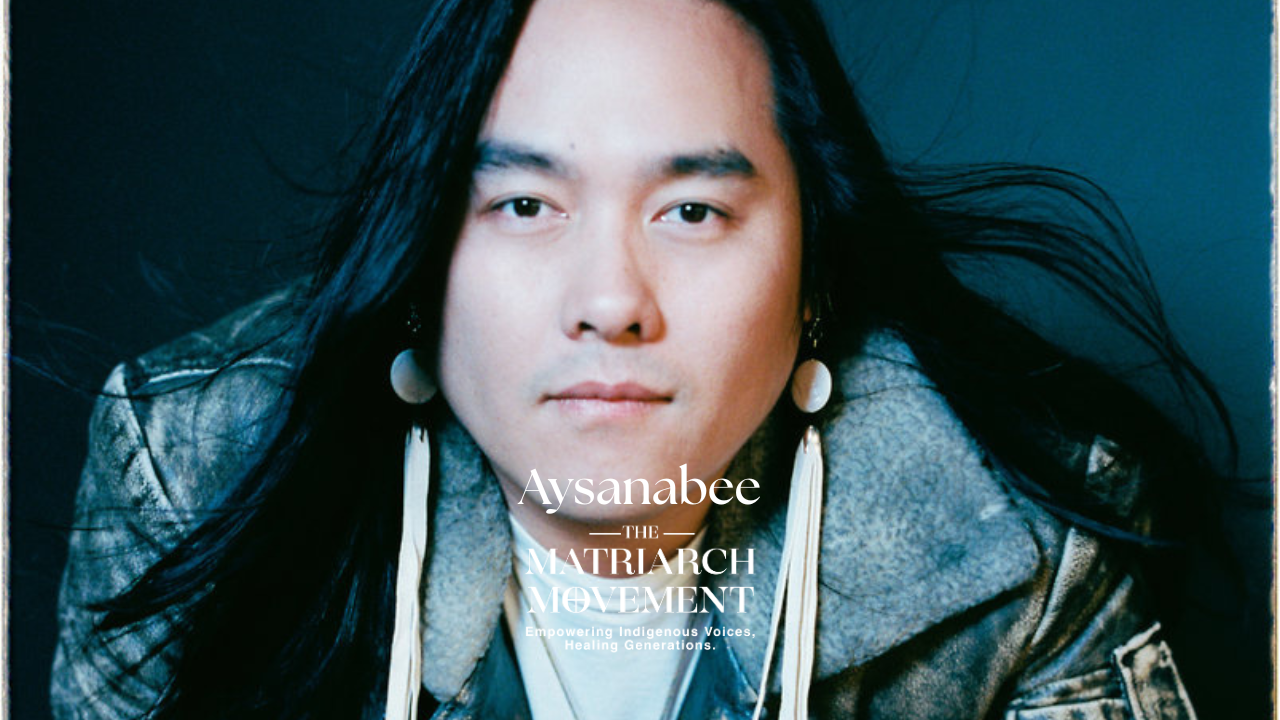
Multi-instrumentalist, producer, and singer-songwriter Aysanabee joins Shayla Oulette Stonechild on the Matriarch Movement Podcast for a powerful conversation about music, family, healing, and the growing global presence of Indigenous artists.
Aysanabee’s journey to becoming an award-winning musician didn’t follow a traditional path. Growing up between Sandy Lake First Nation and a series of small northern communities, some of his earliest experiences with music happened far away from stages and recording studios.
As a kid, he taught himself guitar while spending time in the forest. By the age of 12, he was working in remote mining camps, where he experienced moments that would stay with him for years, including encounters with a bear and a wolf pack.
But it was falling through frozen ice that became a major turning point in his life. After coming frighteningly close to death, he began seriously considering what he wanted to do with the time he had.
That realization eventually led him back to music.
Turning His Grandfather’s Story Into Music
One of the most moving parts of Aysanabee’s story is the creation of his debut album.
During the pandemic, he began having daily phone conversations with his grandfather, a residential school survivor. Those conversations eventually became recorded interviews, preserving his grandfather’s experiences and stories in his own voice.
They would ultimately become the foundation for Aysanabee’s debut album.
The project went on to receive widespread recognition, including being shortlisted for the Polaris Music Prize and earning Aysanabee a Juno Award.
But its significance went far beyond awards.
For Aysanabee, the album became a way to honour his grandfather’s story while creating space for healing. He shares how the process helped his grandfather find a sense of peace before he passed away.
At the same time, releasing such a deeply personal project came with an enormous emotional responsibility. As conversations surrounding residential schools and Canada’s treatment of Indigenous Peoples were receiving national attention, Aysanabee found himself carrying his family’s story onto increasingly larger stages.
From a $40 Application to a Record Deal
Aysanabee’s career also contains its share of unexpected moments.
One of them began with a $40 application fee.
That application eventually led to a record deal, finalized during the pandemic through what became a socially distanced “Zoom dinner.”
From there, his career accelerated quickly.
At one point, Aysanabee played an incredible 184 shows in a single year, taking his music and stories to audiences across the country and beyond.
His success reflects something much bigger happening within Indigenous music: Indigenous artists are no longer being confined to a single genre, audience, or definition of what Indigenous music is supposed to sound like.
Finding Indigenous Connection Across the World
That idea became even clearer during Aysanabee’s recent travels to Taiwan.
While connecting with Indigenous communities there, he discovered striking similarities between communities separated by thousands of kilometres.
There were familiar elements in songs and dances, but also in the larger experience of cultural reclamation and reconnecting with traditions that colonial systems attempted to suppress.
The experience showed just how global the movement toward Indigenous cultural reclamation really is.
The Future of Indigenous Music
Looking ahead, Aysanabee hopes Indigenous artists continue to move beyond the limitations historically placed on them within the music industry.
One of his dreams is to see an Indigenous global pop star: an artist whose Indigeneity is part of who they are without limiting the scale of their success.
It’s a vision of Indigenous musicians not simply being successful within an “Indigenous music” category, but becoming some of the biggest artists in the world.
And Aysanabee is already helping move that vision forward.
Following his latest release, Edge of the Earth, he’s heading into the mountains to begin writing what’s next.
From teaching himself guitar in the forests of northern Ontario to standing on the Juno Awards stage, Aysanabee’s journey is one of survival, storytelling, reclamation, and possibility.
His story is also a reminder that Indigenous music isn’t emerging.
It’s already here, and it’s ready for the world.
Watch the full conversation on the Matriarch Movement Podcast, Season 6: Indigenous Voices of This Generation.
Follow Aysanabee:
Instagram: @aysanabee
Website: aysnabee.com
Explore

Seventh Generation Series
I'm Shayla, Founder, Advocate, and Champion of the Matriarch Movement—a non-profit online platform, podcast dedicated to amplifying the voices of Indigenous women and two-spirit individuals. Kahkiyaw niwâhkômâkanak, all my relations.
Tânisi!